Hotel
Private Coach
2 Crew Per Vehicle
Moderate
3-5* Hotel
Delhi - Delhi
10 - 50+
All Year
Unlimited
10
11
India is a place of such diversity, mystery and the exotic. The sights and sounds are so vivid from the Taj Mahal to spotting an Indian Tiger. This is a cultural and personal learning experience for the student that will endure for a lifetime.

Tour type: Hotel
Vehicle type: Private coach
Crew: 2 crew PER vehicle
Tour rating: Moderate
Tour start – finish: Delhi – Delhi
Number on tour: 10 – 50+
Delhi city tour
Hardiwar
Jaipur – Amber Fort
Jaipur City Palace
Ranthambore National Park
Agra
Taj Mahal
Humayun’s Tomb
International flights
Arrival / departure transfers on day 1 & 9
Full board: 8 breakfasts, 7 lunches, 8 dinners
8 nights in a 3-5* hotel
Transport in a private coach
Services of 1 or 2 person crew
All entrance fees
All road taxes and tolls
Knowledge and know-how of 21+ years experience in the schools’ market
Full Public Liability, Professional Indemnity & Crisis Management Insurance cover
Free travel insurance (UK residents only and if no school policy in place)
100% Financial Protection though ABTA/ATOL Bonding
All tours fully Risk Assessed
Full bespoke in-house service to take the strain out of organising your tour
Free teacher places
Free iPad or Kindle with your first booking
Drinks (except mealtimes)
Visa costs (if applicable)
Spending money
Tips for guide(s) and driver(s)
Single Supplements
Optional Activities
Art and Craft Workshop – Jaipur (approx £40)
2 hour Yoga session – Rishikesh (approx £30)
Ziplining – Rishikesh (approx £50)
Additional park drive – Ranthambore (approx £49)
Bollywood Dancing – Delhi (approx £40)
Wildlife SOS – Agra (approx £25)
Visas & permits
Visas are required for British, Australian, New Zealand, Canadian, US and other EU nationals for a stay of up to 3 months. These can be obtained on arrival. Please ensure your passport is valid for six months from you date of entry and that you have at least two empty pages in your passport. All other nationalities should contact their Indian embassy for details. Visa requirements do change, it is your responsibility, so please don’t forget to check!
Vaccinations
It is recommended that you be vaccinated for Tetanus and Polio, if you haven’t had a booster in the last ten years. Food and waterborne diseases are more common, so we recommend vaccinations for typhoid (valid 3 years) and Hepatitis A (validity varies). Northern India is a low-risk malaria area and anti malarials may not be advised. Please consult a physician or travel clinic for further information before you travel.
Travel insurance
All our passengers must be fully insured for travel to India. It is essential that you get the correct level of cover. Please ensure that the policy provides adequate cover for hospital treatment, repatriation flights home in the event of you being too ill to continue the trek, personal accident, personal baggage and associated valuables. You must bring the policy with you as it is obligatory for joining any expedition.
Packing
Luggage: Pack all your gear in a rucksack / backpack for this type of trip. Also bring a daypack, to keep personal items such as your wallet, camera and water bottle. Your rucksack / backpack must not have an exterior frame. Only the soft, flexible variety is permitted. Leave your suitcase at home, they’re simply not practical. Don’t overdo it! Luggage is limited to 20kgs. We will supply a full kit checklist on booking to aid your preparation but below is a preliminary list:
Towel
Torch and batteries
Camera and spare memory card / film
Mosquito repellent & net
Water bottle (water at meal times provided)
Personal Irst aid kit, antiseptic gel and wipes
Waterproof / wind proof jacket
A sturdy pair of walking shoes
Two spare passport photos and a photocopy of your passport
Sun screen
Cultural awareness
We cannot emphasise enough that we are travellers and therefore guests. Although we ourselves might have different views, ideas, rules and morals, it is our duty to respect and adjust where possible to the people of the region we are visiting. Never throw pens / sweets out of the vehicle. It is very patronising! Your Tour Leader will also brief you on environmental matters.
Religious Awareness
India is a land of different religions which are characterised by various religious practices and beliefs. The spiritual land of India has given birth to many religions such as Hinduism, Sikhism, Jainism and Buddhism.
Animal Welfare Policy
The welfare of animals in the different countries we tour in, is important to us. Our Animal Welfare Policy at Nomadic School Tours was created in accordance with ABTA and Industry guidelines, which focuses on the health care and positive maintenance of our working animals and wildlife we encounter. By working closely together with our local business partners, we strive to maintain the correct standards of animal welfare.
Jarjeer Mule and Donkey Refuge
Recently, in conjunction with our Animal Welfare Policy, Nomadic has decided to financially support Jarjeer Mule and Donkey Refuge. Jarjeer Mules is a retirement home, orphanage and care centre for working equines in the foothills of the Atlas Mountains near Marrakech. The team works with local people offering support not only to the equines but also children and adults who want to learn more about equine care.
Nomadic School Tours Association
Nomadic School Tours work with and donate to the Ait Ouham Association for Development, which is a grass roots organisation that tackles local issues such as lack of education and and poor infrastructure in the Atlas Mountain area of Morocco. It especially concentrates on the education and creating opportunities for girls in the Valley to further their education.
Currency
GBP £1.00 = INR 92.6
USD $1.00 = INR 70.8
EUR €1.00 = INR 80.3
INR – INDIAN RUPEE rates are subject to fluctuation. Exchange facilities are available at various bureau de changes in major towns and most banks have ATMs. How much spending money is needed, depends largely on the individual. We currently recommend an average of USD $20 – $30 per day. We can’t specify every sundry cost however and you’ll need to allow for expenses such as drinks, snacks and the odd souvenir. Travellers Cheques can be difficult to change en-route, so we recommend you have cash for convenience and bring a card to use in the ATM’s—most accept Visa, MasterCard, Electron, Cirrus and Maestro. There are ATM’s at the airport, which you can use upon arrival.
Local prices
Mineral water (500ml) Rs 5
Chocolate bar (local brand) Rs 500
Climate
The weather is mainly hot most of the year with significant variations from region to region. The coolest weather lasts from around the end of November to the beginning of March, with fresh mornings and evenings, and mostly sunny days. The really hot weather, when it is dry, dusty and unpleasant, is between March and June. Monsoon rains occur in most regions in summer anywhere between June and early October.
Welcome to India! No doubt you’ve had a long flight so we will get you settled into your hotel where you can get a good night’s sleep before starting your 9 day discovery of this amazing place.
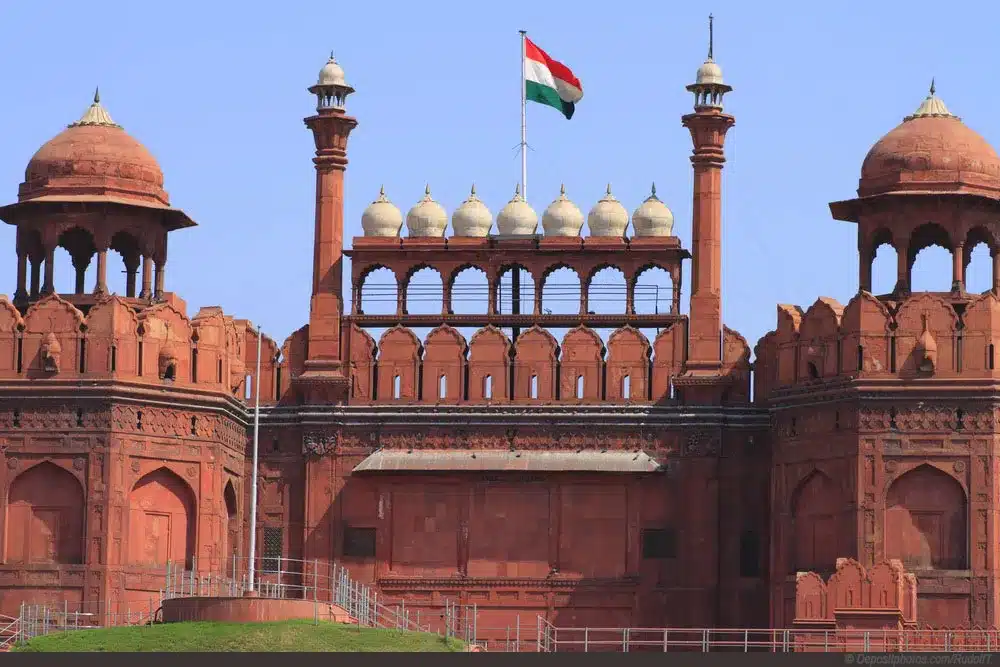
After a hearty breakfast your full day of sight-seeing through Old and New Delhi will begin. Qutab Minar is a soaring 73-metre-high tower of victory, built in 1193 by Qutab-ud-din Aibak immediately after defeating Delhi’s last Hindu Kingdom. The tower has five distinct stories, each marked by a projecting balcony and tapers from a 15m diameter at the base to just 2.5 metres at the top. The first three stories are made of sandstone with the top two made of marble and sandstone. Another stop is the Red Fort which was the main residence of the emperors of the Mughal dynasty for nearly 200 years, until 1856. It is located in the centre of Delhi and houses a number of museums. In addition to accommodating the emperors and their households, it was a ceremonial and political centre of the Mughal state and for events critically impacting the region. We’ll also visit Chandni Chowk which is in the heart of Old Delhi and is a busy shopping area with markets full of spices, dried fruit, silver jewellery and vivid saris. Narrow side streets are crowded with tiny shops selling essential oils, stationary and traditional Indian sweets. What will you find in your explorations?
It’s an early start today to catch your train to Hardiwar. We’ll provide you with a packed breakfast which you can enjoy on your journey. On arrival in Hardiwar, our guide will greet you and you’ll be transferred to your hotel for lunch before enjoying a guided tour of the city. Hardiwar is an ancient city and an important Hindu pilgrimage site in the foothills of the Himalayas. The city is the largest in its district and has grown beyond its religious importance – providing a kaleidoscope of Indian culture and development. In the evening you’ll be taken to Har Ki Pauri – the largest of several sacred ghats. Here you will experience the Ganga Aarti (river worshiping ceremony) in which tiny flickering lamps are floated off the bathing steps.
In the morning you’ll enjoy breakfast in the hotel before travelling out of Hardiwar and over to Rishikesh. Rishikesh is most famous for the Kaksham Jhula, a hanging bridge across the river Ganga that connects two villages. The entire bridge is made of iron, is 450 feet long and stands 70 feet above the river. The bridge is very popular with tourists because of its rich mythological history. Rishikesh is also renowned for its centres for studying Yoga and meditation. Temples and ashrams line the eastern bank around Swarg Ashram which is a traffic free, alcohol free and vegetarian enclave upstream from the town. On our tour we will visit the ashram made famous by the Beatles, the Gita Bhawan Temple and the Triveni Ghat. If you would like to participate in a yoga class or try adventurous activity (another thing Rishikesh is known for) there is the opportunity to book. At the end of the day we’ll return you to Haridwar for dinner and your overnight stay.
We will leave for the airport after breakfast where you will catch your flight to Jaipur. Once you have arrived our guide will greet you and make sure you get to your hotel. The evening is yours to enjoy exploring the local market or just relaxing in your hotel room.
Today is a full day taking in the sites of Jaipur. “The City of Victory”, was first intended to be “Sawai Jaipur”, named after the boy Prince, who commissioned it – Maharaja Jai Singh II – a warrior, astronomer and politician who reigned over the Mughals from 1699 to 1743. Today’s Jaipur is pink, visually described as the city shaded with the autumn colours of a sunset. Although originally the walls were render set and pigmented the colour of red sandstone, Jaipur’s universal coat of pink only came in 1876 to coincide with the visit of the Prince of Wales (King Edward VII). Almost the entire city was given a coat of pink paint, thus giving it the name “The Pink City”. This city is the perfect example of urban and rural cultures blending harmoniously. You’ll head to Amber Fort – tour the chambers and hallways of the palace, famous for the excellence of its design and decoration. Within the complex is Ganesh Pol, an imposing gateway painted with the images of the elephant-headed god, Ganesh. Next up you’ll visit the Jantar Mantar Observatory Although it was built in the 1700s it appears to be quite futuristic. It houses unique instruments for measuring the harmony of the heavens. Continue your visit to City Palace to witness the Maharaja’s private collection of textiles and armoury. Culminate the tour with a photo stop at Hawa Mahal also known as the “Palace of the Winds”. This beautiful façade is probably the most-photographed in Jaipur, with its ornately carved windows designed so the ladies of the palace could look out onto the streets unobserved. After all the sightseeing is said and done, we will transport you to Rathambore for your overnight stay.
First thing in the morning you will hop into a shared cantor and head into the park. Ranthambore National Park is best known for its tigers and is hailed as one of India’s finest wildlife destinations. The Park covers nearly 400 square kms and is dotted with structures that will remind you of a bygone era. Along with the tigers you are also bound to see striped hyenas, jungle cats, bats, mongoose and perhaps even a leopard, to name just a few. There are also snub-nosed marsh crocodiles, lizards, tortoises, pythons and vipers to keep a look out for. The park is dotted with ruins and lakes which give it a unique and wonderful mix of nature and history along with the wildlife. After your adventure you will return to the hotel for breakfast then travel to Agra with a stop for lunch along the way.
We have saved the best for your last day in India. At sunrise we will take you to the Taj. The 17th century Taj Mahal is often called a poem in stone. If so, the mausoleum is a love poem – created by Mughal Emperor Shah Jahan for his favourite wife Mumtaz Mahal. It took 22 years to be completed and was designed and planned by a Persian architect Ustad Isa. Apart from its stunning design balance and perfect symmetry, the Taj is also noted for its elegant domes, intricately carved screens and some of the best inlay work ever seen. After breakfast we will do one of two things. If we are able to get the first time slot of the morning, we will take you to Wildlife SOS where you will see bears and elephants who have been rescued from their previously harmful lives. You will get to see how they are progressing in their new protected environment and perhaps help with some of their daily activities. If this option is not possible, we will instead take you to Agra Fort. An imposing structure with walls of red sandstone, almost two miles long, it contains palaces, audience halls and mosques. The fort presents a good sampling of Islamic and Hindu architectural styles. It was built by the third Mughal Emperor, Akbar. Subsequent additions were made to the fort by his son Jahangir and grandson Shahjahan.
It’s time to say goodbye to this unique and wonderful country. We hope you feel you have truly discovered Northern India over these 9 days. Thank you for travelling with Nomadic School Tours.
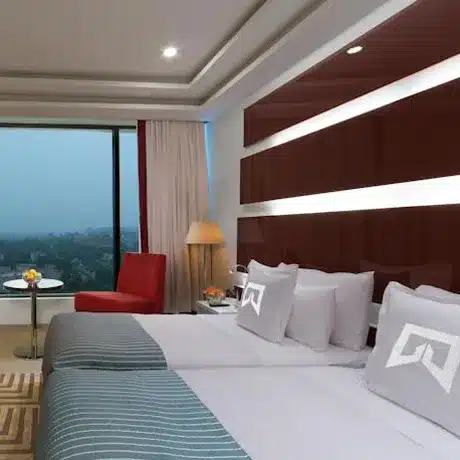
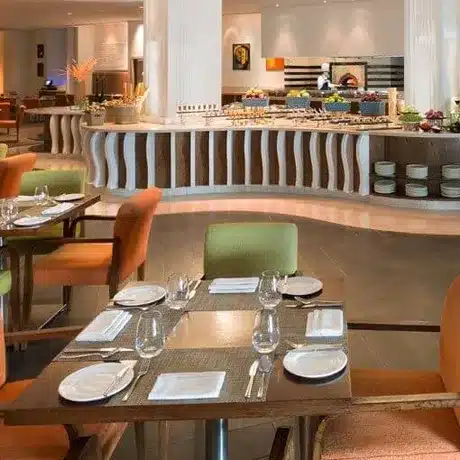
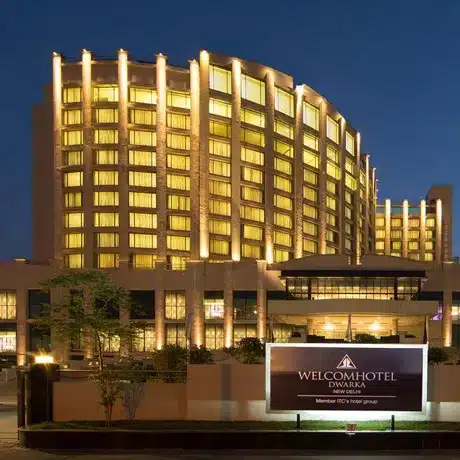
WelcomHotel Dwarka (ITC Welcome) Delhi or similar
Nomadic’s View
This lovely hotel is a 3-minute walk from the nearest metro station and 8 km from the Indian Air Force Museum. The upscale rooms offer free Wi-Fi, flat-screen TVs, tea and coffeemaking facilities, and electronic safes. Bookings include free parking and a complimentary breakfast buffet. Guests have three restaurant options serving a range of food such as Chinese, Japanese, international and Indian cuisine. Other amenities include a fitness room and an outdoor pool.

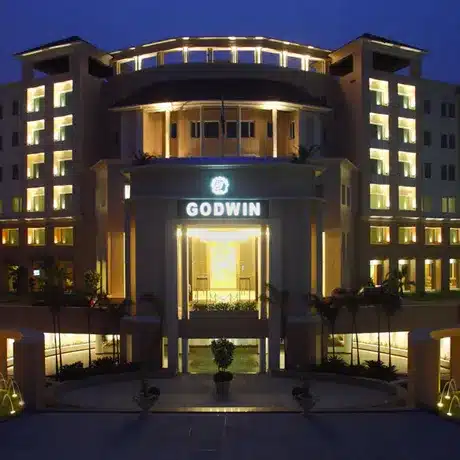
Hotel Godwin or similar
On the outskirts of Rajaji National Park, and 3.1 km from Motichur Railway Station, this modern hotel is 10 km from both the Mansa Devi Temple and the Chandi Devi Temple.
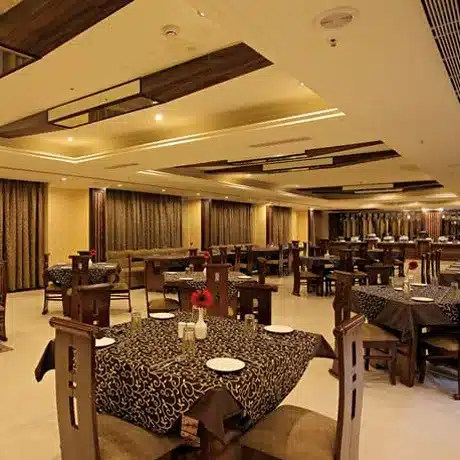
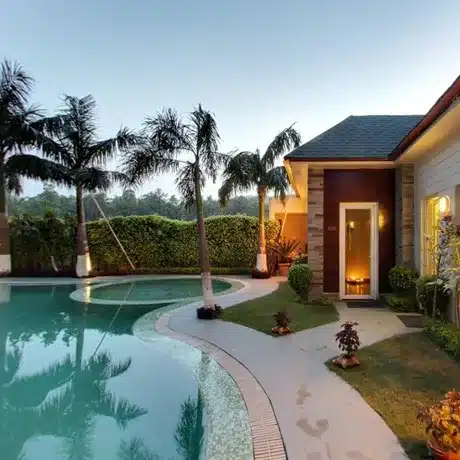
Subdued rooms are warmly furnished featuring marble floors, free Wi-Fi and satellite TVs, as well as minibars, tea and coffeemakers and safes. Freebies include breakfast and parking. There’s a restaurant, a bar and a coffee shop. Other amenities consist of an exercise room, a spa, an outdoor pool and a garden.


Royal Orchid Jaipur or similar
Nomadic’s View
Hotel Royal Orchid offers 139 rooms and boasts a roof top swimming pool. Rooms all have ensuites and free Wi-Fi along with LCD TV’s and a mini bar. The hotel has two restaurants, one multi-cuisine and one Indian cuisine, and a Salsa Lounge Bar.


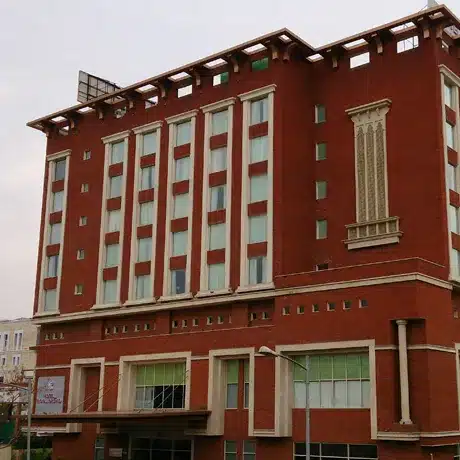

Ankur Resort or similar
Nomadic’s View
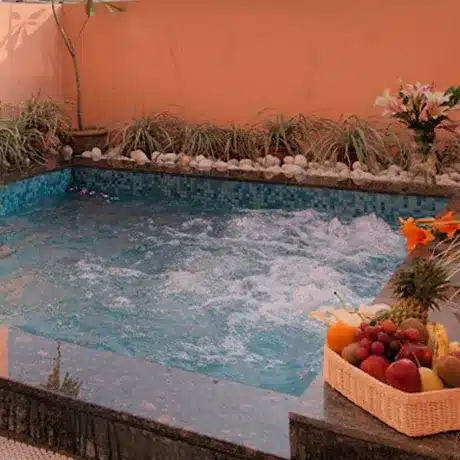
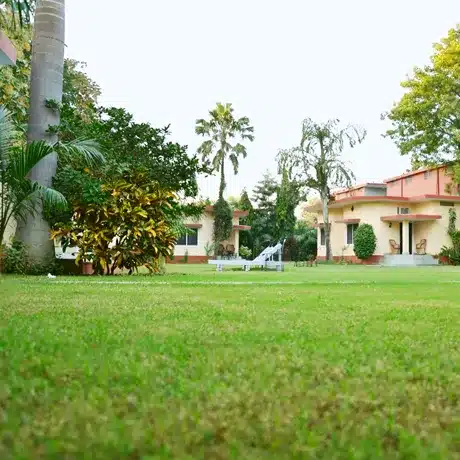
The Ankur Resort, ideally located close to Ranthambore National Park, has 60 rooms which are basic but clean and comfortable. Each has air conditioning and ensuites. The resort has a lovely restaurant with both international and Indian cuisine on the menu and there is a bar as well. There is also a swimming pool and an indoor games area to entertain you after your visit to the Park.


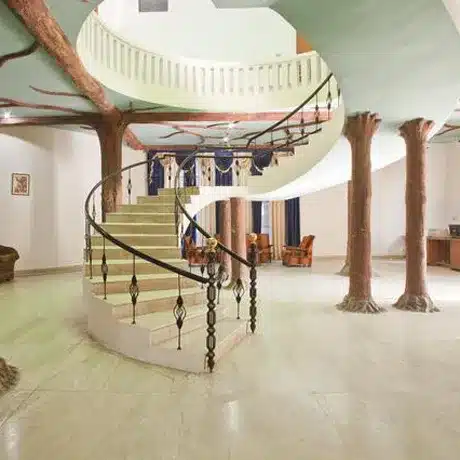
Howard Plaza Fern Agra or similar
Nomadic’s View
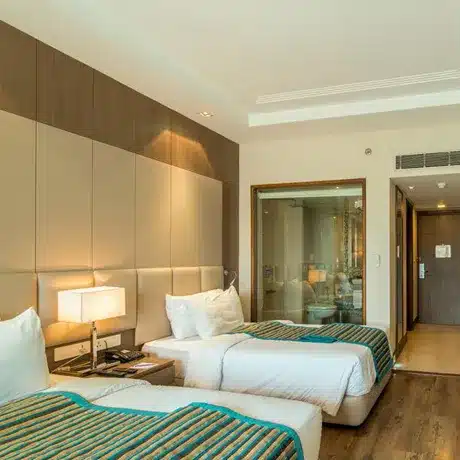
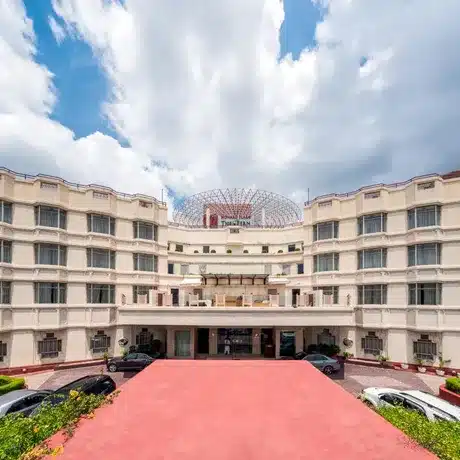
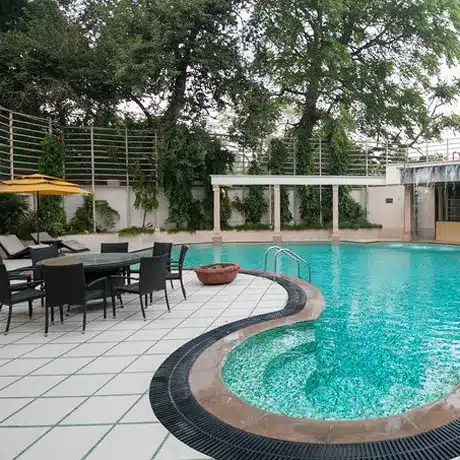
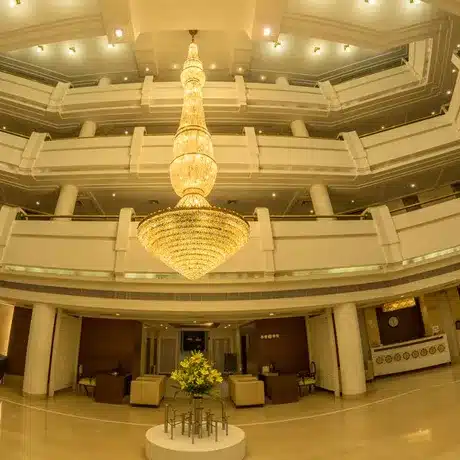
Set 1.9 km from the Taj Mahal, this modern hotel is also 2.9 km from Agra Fort and 3.5 km from Jama Masjid mosque. Featuring hardwood floors, the rooms have minibars, flat-screen TVs and Wi-Fi (fees may apply). There is an upscale restaurant as well as a relaxed tea lounge with a patio. A buffet breakfast is available in the mornings. Spa facilities are on site and feature a gym, and outdoor swimming pool. Parking is included.

(66 Reviews)

Have a question, or ready to explore ideas?
We’re here to help you shape a trip that works for your students, your subject, and your school.
Tell us a little about what you’re looking for, and we’ll guide you through the next steps.